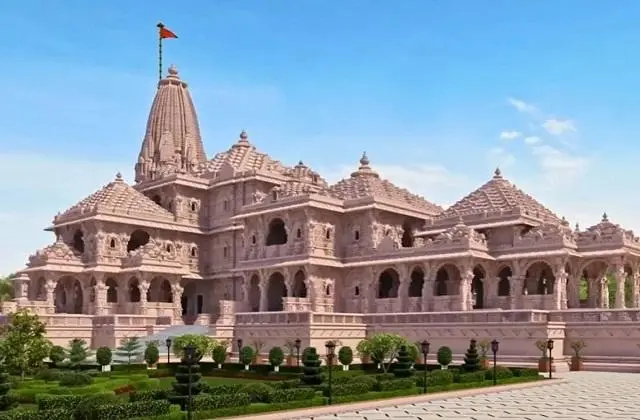
Ayodhya
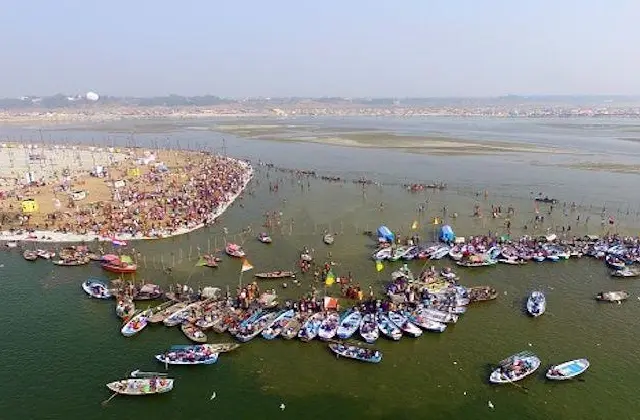
Prayagraj
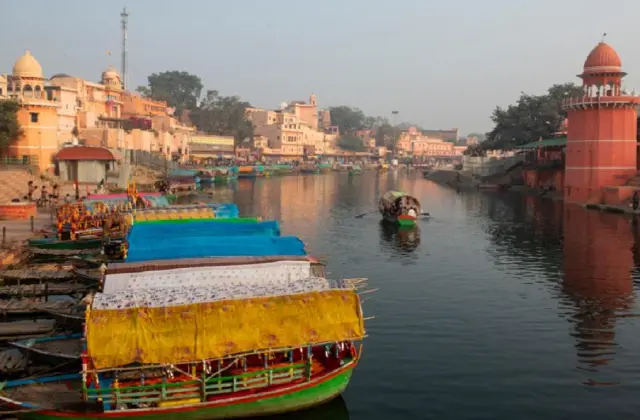
Chitrakoot
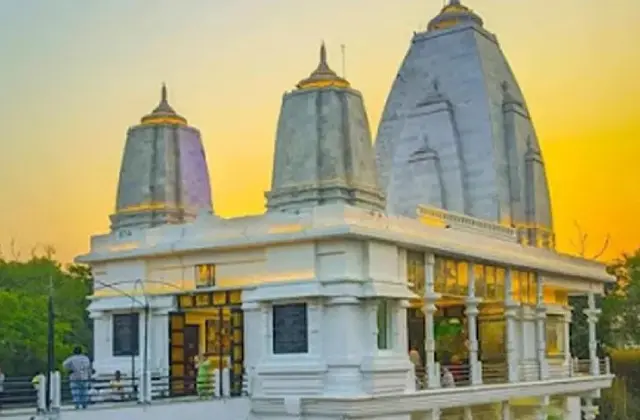
Sitamarhi
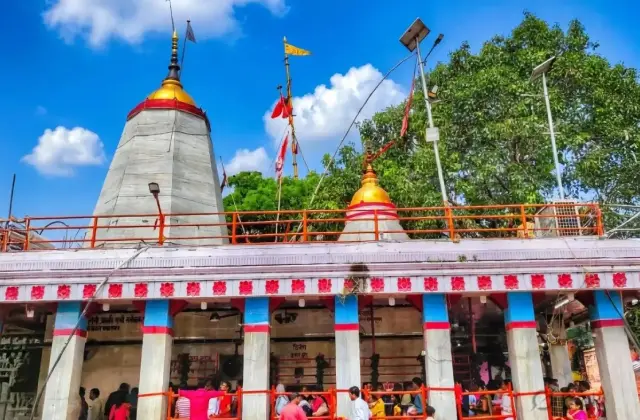
Vindhyachal
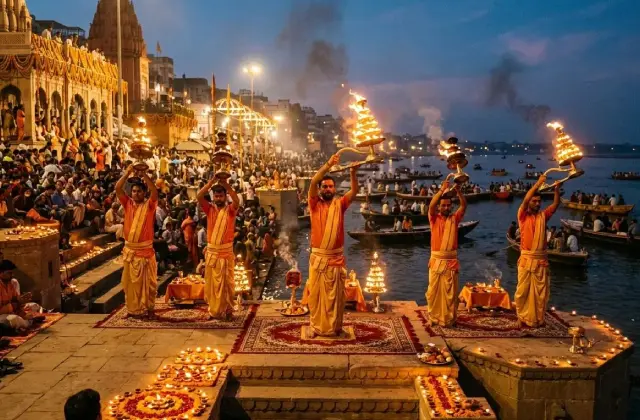
Varanasi
Day 1: Arrival Ayodhya
Namaste and welcome to Ayodhya, the sacred birthplace of Lord Rama and one of India's most revered pilgrimage destinations. Known for its ancient temples, rich Ramayana heritage and peaceful atmosphere along the holy Saryu River, Ayodhya offers a divine beginning to your spiritual journey. Our representative will welcome you and assist with your arrival. Visit Shri Ram Janmabhoomi Temple, Hanuman Garhi and Kanak Bhawan. In the evening, experience the spiritual ambiance of the Saryu River and attend the beautiful Saryu Aarti.
Day 2: Ayodhya – Prayagraj
Proceed to Prayagraj, a sacred city famous for its religious heritage and the holy confluence of three rivers. Visit Triveni Sangam, where the Ganga, Yamuna and mythical Saraswati rivers meet. The city is an important pilgrimage centre and is known for its spiritual traditions and historic temples. Also visit Hanuman Temple and other prominent attractions. Spend the evening exploring the peaceful surroundings of this holy city.
Day 3: Prayagraj – Varanasi
Proceed to Varanasi, one of the oldest continuously inhabited cities in the world and a major centre of Hindu spirituality. Situated on the banks of the sacred Ganga River, Varanasi is renowned for its ancient temples, vibrant ghats and timeless religious traditions. On arrival, explore the famous ghats and experience the divine atmosphere of the city.
Day 4: Varanasi Sightseeing
Explore the spiritual treasures of Varanasi, a city deeply connected with Lord Shiva and India's ancient religious heritage. Visit the sacred Kashi Vishwanath Temple, one of the twelve Jyotirlingas, along with Annapurna Temple and other important spiritual sites. Later, explore the famous ghats of Varanasi, where pilgrims gather for prayers and sacred rituals. In the evening, witness the mesmerizing Ganga Aarti at Dashashwamedh Ghat, a memorable experience filled with devotional chants, lamps and traditional ceremonies.
Day 5: Departure Varanasi
Enjoy your final moments in the spiritual city of Varanasi, known for its timeless traditions, sacred river and peaceful devotional atmosphere. Proceed to Varanasi Airport or Railway Station for your onward journey. Depart with wonderful memories of your spiritual tour through Ayodhya, Prayagraj and Varanasi, experiencing the sacred heritage, religious traditions and divine atmosphere of these holy destinations.
INCLUSIONS:
- 04 Nights accommodation in the mentioned hotels or similar category.
- All transfers and sightseeing by private air-conditioned vehicle as per the itinerary.
- Airport or Railway Station pick-up and drop-off in Varanasi.
- All applicable driver allowances, toll taxes, parking charges and fuel costs.
- Sightseeing and visits to temples and pilgrimage destinations as mentioned in the itinerary.
- All applicable hotel taxes.
EXCLUSIONS:
- Airfare or train tickets to and from the destination.
- Any meals not specifically mentioned in the inclusions.
- Personal expenses such as laundry, telephone calls, tips, room service and shopping.
- Temple special darshan tickets, VIP darshan charges or puja expenses.
- Boat rides, local guides or any optional activities.
- Any additional sightseeing or transportation not mentioned in the itinerary.
- Early check-in or late check-out charges.
- Travel insurance and medical expenses.
- Any expenses arising due to unforeseen circumstances such as road closures, weather conditions or delays.
- Any services not specifically mentioned under the inclusions.
India
Journey to India.......once is not enough!!!!
BANKING AND CURRENCY
Currency
The Indian Rupee is the official currency of the Republic of India. The modern Indian Rupee is subdivided into 100 paise (singular paisa). Banknotes in circulation come in denominations of INR 5, 10, 20, 50, 100, 500 and 2000. Please note that as of November 2016, the older 500 and 1000 INR note are no longer valid legal tender and only new ₹500 notes will be accepted.
The latest Indian Rupee coins are available in denominations of INR 1, 2, 5, 10.
The import and export of local currency is prohibited. The import of foreign currency is unlimited. However, amounts exceeding US$5,000 or equivalent in cash, or US$10,000 or equivalent in all forms of currency must be declared. The export of foreign currency is allowed up to the amount imported and declared.
Currency can be changed at banks, airports or authorised money changers. Many hotels also have facilities to change money but this is a more expensive option. It is illegal to exchange money through unauthorised money changers. US Dollars and Pounds Sterling are the easiest currencies to exchange.
Banking
Banking hours: Monday-Saturday 10h00-03h30 (Bank will be closed on second and forth Saturday).
Strictly speaking, you can neither import nor export Indian currency, but you can get some at the airport straight away to at least get you transport to your accommodation. There are Authorized Foreign Exchange dealers in most big cities, and banks will also change your currency at a fair rate if you have time for the paperwork.
A good way of getting your travellers currency is via an ATM but beware of hidden bank charges, both from the bank providing the ATM and the card-issuing bank - you also do not know what exchange rate you are getting.ATMs are found in most towns and are recommended for cash withdrawals.
Visa, MasterCard and American Express are usually accepted in tourist hotels and many other shops. Debit cards are also widely accepted.
Travellers cheques are widely accepted and may be changed at banks and larger hotels. The most widely accepted currencies include US Dollars and Pounds Sterling. Some banks may refuse to change certain brands of traveller's cheques whilst others may exchange quite happily.
TRAVEL, TRANSPORT AND GETTING AROUND
India is big and there are lots of interesting ways to travel around it, most of which could not very well be described as efficient or punctual. Allow considerable buffer time for any journey with a fixed deadline (eg. your flight back), and try to remember that getting there should be half the fun.
India's large size and uncertain roads make flying a viable option, especially as prices have tumbled in the last few years. Even India's offshore islands and remote mountain states are served by flights, the main exceptions being Sikkim and Arunachal Pradesh (although crossing over from neighbouring states is fairly easy). Due to the aviation boom over the last few years, airports have not been able to keep up with the air traffic. Most Indian airports continue to function with one runway and a handful of boarding gates. Check in and security queues can be terribly long, especially in Delhi and Mumbai.
Railways were introduced in India in 1853, more than one and half a centuries ago, by the British, and today India boasts of the biggest network of railway lines in the world, and the rail system is very efficient, if not always on schedule. Travelling on Indian Railways gives you the opportunity to discover the Indian landscape and scenic beauty first hand and is generally more economical than flying domestic. It is one of the safest ways of travel in India. With classes ranging from luxurious to regular, it's the best way to get to know the country and its people. Most train passengers will be curious about you and happy to pass the time with a chat.
In central locations of big cities like airports or stations reliable pre-paid taxis are available and will save you money as well as the bargaining hassle. However beware of touts who would claim themselves to be running pre-paid taxis. Always collect the receipt from the counter first. The receipt has two parts - one part is for your reference and the other part you will need to handover to the taxi driver only after you reach your desired destination. The taxi driver will get his payment by submitting or producing this other part to the pre-paid taxi counter. Normal taxis running by meter are usually more common. In many non Metro Cities (or even in Metros depending on time) taxies or autos may ply without the usual meter.
While you can't take a cross-country bus-ride across India, buses are the second most popular way of travelling across states and the only cheap way of reaching many places not on the rail network (eg. Dharamsala).
FOOD, DRINK AND CUISINE ADVICE
Water for drinking, brushing teeth or making ice should first be boiled or otherwise sterilised. Milk is often unpasteurised and should be boiled. Avoid dairy products likely to have been made from non-boiled milk. Only eat well-cooked meat and fish. Do not eat salads, vegetables should be cooked and peel your own fruit. Don’t eat street vendor food unless it is piping hot. Tap water is not safe to drink, rely on bottled water which is widely available. However, do check the seal on bottled water.
Indian food is world-renowned for its tantalising flavours, spiciness and enormous variety. Curries are created from the subtle and delicate blending of spices such as cumin, turmeric, cardamom, ginger, coriander, nutmeg and poppy seed although these vary from region to region and every spice has medicinal properties and use.
Vegetable dishes are more common than in Europe, particularly in the fruity, coconutty dishes of southern India, while northern India has an entirely different but equally satisfying cuisine to sample. Breads like paranthas, chapatis, naans and rotis are also part of the main diet in several states like Punjab, Haryana and Uttar Pradesh. Achars (pickles), relishes and chutneys again vary by region and add more resonance to amazing meals.
Sweets or mithai too have regional specialities. They tend to be milk based and some are syrupy and fried. Well-known northern sweets are gulab jamun, jalebi (it’s worth watching how these syprup-based confections are made in the street), kulfi, kheer, halwa and laddu. From the east are rasgulla and rasmalai. The south has several burfi and halwa-type desserts like coconut burfi and badam halwa made from almonds.
While care should be taken in where one eats, exceptional food can be had in the most humble surroundings such as food at ashrams as can be found in 5-star restaurants. Non-vegetarians will find fabulously spiced mutton dishes according to regional specialities including fish dishes typical to coastal areas.
10 to 15% is usual in restaurants that impose no service fee; optional where service fee is added to bill.
CLIMATE AND WEATHER
The weather is mainly hot most of the year with significant variations from region to region. The coolest weather lasts from around the end of November to the beginning of March, with fresh mornings and evenings, and mostly sunny days. The really hot weather, when it is dry, dusty and unpleasant, is between March and June. Monsoon rains occur in most regions in summer anywhere between June and early October.
CLOTHING AND DRESS RECOMMENDATIONS
Male or female, one rule covers all visitors to India: don't leave the house with your arms or legs bare. You'll naturally get attention as a foreigner, as full-on staring is common and accepted on Indian streets, but you'll suffer far less negative attention if you remain covered up. For most locations and seasons in India, thin, loose linen or cotton pants and button-down shirts will keep you comfortable in hot, humid weather and help you blend in. While you may see Indian young adults sporting tight jeans and fitted brand-name tops, you'd stand out significantly more in the same outfit. If you visit anywhere in northern India - not just the mountains, Delhi too - during the winter, prepare for seriously cold weather. Bring jeans and heavy shirts and pick up an Indian wool wrap.
What you can get away with at an Indian beach depends entirely on which beach you visit. In the state of Goa, a popular beach and club getaway destination, locals are accustomed to seeing tourists in bikinis on the beach and Indian men often sport Speedos. But skimpy clothes need to stay on the beach. Don't walk around town or your hotel in nothing but a bikini and sarong. In less Western-frequented beach destinations, such as the beaches around Bombay, Alibag and Chowpatty, or anywhere in the south, hit the beach in light pants and a tunic.
When visiting temples and other religious sites on your own or part of a tour, be on the lookout for signs advising visitors to dress in a specific way to enter the temple. The government of India advises that some religious institutions require visitors to cover their heads or remove their shoes, and covering your legs and arms in respect goes without saying. Certain sites may carry more specific requirements, such as donning a certain colored sash or sarong-like covering. Take your cue from other visitors exiting the site.
ELECTRICITY AND PLUG STANDARDS
For the most part, electrical sockets (outlets) in India are the "Type D" 5 amp BS-546 sockets. This is actually an old British standard. The "Type D" Indian plug and socket is not to be confused with the "Type M" South African plug and socket. In pictures, they look very similar, but the South African type is much larger than the Indian type, and they are physically incompatible. If your appliance's plug doesn't match the shape of these sockets, you will need a travel plug adapter in order to plug in.
Electrical sockets (outlets) in India usually supply electricity at between 220 and 240 volts AC. If you're plugging in an appliance that was built for 220-240 volt electrical input, or an appliance that is compatible with multiple voltages, then an adapter is all you need. If your appliances are not compatible with 220-240 volt electrical output, a voltage converter will be necessary.
Terms & Conditions:
- Cost based on 6 persons travelling together
- Above rates are not valid during long weekends, festive periods & peak or blackout dates